
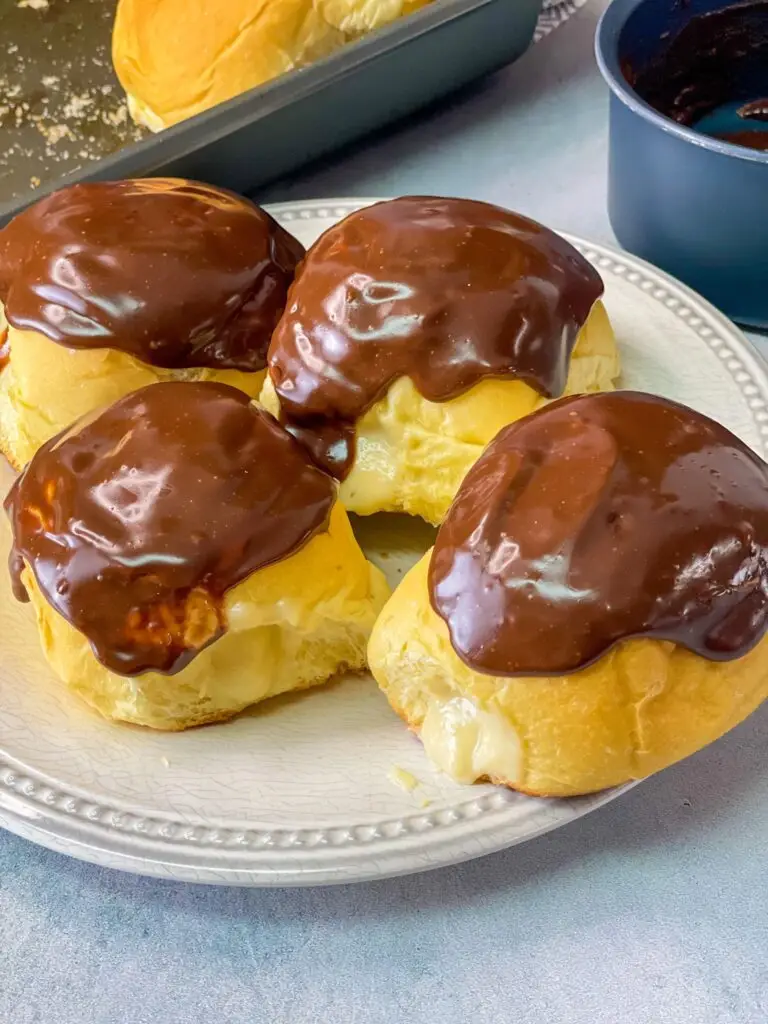
100% Sourdough Brioche Boston Cream Donuts with Vanilla Custard and Chocolate Ganache
There is something distinctive about a Boston cream donut made entirely from scratch. The contrast between soft enriched dough, silky vanilla custard, and smooth chocolate ganache creates a dessert that feels both nostalgic and bakery-worthy. Replacing commercial yeast with a 100% sourdough fermentation adds even more depth. The dough develops a richer flavor profile, a tender crumb, and subtle complexity that balances the sweetness of the filling and topping.
These 100% sourdough brioche Boston cream donuts use no commercial yeast at all. The rise comes entirely from an active sourdough starter. Since brioche dough contains butter, eggs, and sugar, fermentation is slower than lean bread dough, so patience matters. The reward is exceptionally soft donuts with a light texture and a flavor that improves the classic Boston cream experience.
This recipe makes approximately 12–14 large donuts.
Preparation Time
- Active prep time: 1 hour 30 minutes
- First fermentation: 8–12 hours
- Cold proof: 6–12 hours
- Final proof: 2–4 hours
- Frying and assembly: 45 minutes
- Total time: approximately 18–24 hours
Ingredients
For the Sourdough Brioche Donut Dough
- 150g active sourdough starter (100% hydration, bubbly and recently fed)
- 500g bread flour
- 60g granulated sugar
- 10g salt
- 3 large eggs, room temperature
- 120ml whole milk, slightly warm
- 1 teaspoon vanilla extract
- 170g unsalted butter, softened and cut into cubes
For Frying
- Neutral frying oil such as canola or vegetable oil
For the Vanilla Custard Filling
- 500ml whole milk
- 5 large egg yolks
- 100g granulated sugar
- 35g cornstarch
- 1 tablespoon unsalted butter
- 2 teaspoons vanilla extract or seeds from one vanilla bean
- Pinch of salt
For the Chocolate Ganache
- 170g semi-sweet chocolate, finely chopped
- 120ml heavy cream
- 1 tablespoon corn syrup or honey (optional for shine)
- Pinch of salt
Optional Garnish
- Chocolate curls
- Powdered sugar
- Vanilla bean specks
Step 1: Build and Prepare Your Sourdough Starter
For enriched dough, a strong starter is essential. Feed your starter about 4–6 hours before mixing the dough.
Example feeding ratio:
- 50g starter
- 50g flour
- 50g water
Wait until the starter doubles or triples in size and becomes bubbly and airy. If your starter is weak or underactive, the dough may take significantly longer to ferment.
Step 2: Mix the Brioche Dough
In the bowl of a stand mixer, combine:
- Active starter
- Flour
- Sugar
- Salt
- Eggs
- Milk
- Vanilla extract
Mix on low speed until ingredients come together into a shaggy dough.
Increase to medium speed and knead for approximately 8–10 minutes.
The dough will begin to strengthen but may still feel firm.
Gradually add softened butter one cube at a time. Allow each addition to become incorporated before adding the next.
Continue kneading for another 10–15 minutes.
Initially the dough may appear greasy and messy. This is normal. Eventually it should become smooth, elastic, glossy, and pull away from the bowl.
Perform a windowpane test by stretching a small piece of dough. It should stretch thinly without tearing.
Place the dough into a lightly greased bowl.
Cover tightly.
Step 3: Bulk Fermentation
Leave the dough at room temperature for approximately 8–12 hours.
The exact timing depends on:
- Starter strength
- Room temperature
- Flour type
- Dough temperature
Because brioche is rich in butter and eggs, expect slower fermentation than regular bread dough.
The dough may not completely double but should increase noticeably in volume and feel puffy.
Step 4: Cold Ferment Overnight
Place the covered dough in the refrigerator for 6–12 hours.
Cold fermentation serves several purposes:
- Improves flavor
- Makes dough easier to handle
- Strengthens dough structure
- Prevents overly sticky shaping
Cold dough is much easier to cut and shape into donuts.
Step 5: Shape the Donuts
Remove chilled dough from the refrigerator.
Lightly flour your work surface.
Roll the dough to approximately ½-inch (1.25cm) thickness.
Using a 3-inch round cutter, cut circles from the dough.
Since these are filled donuts rather than ring donuts, do not cut center holes.
Place the rounds on parchment-lined baking trays, leaving space between each.
Gather scraps gently and reroll if needed.
Cover loosely with plastic wrap or a clean kitchen towel.
Step 6: Final Proof
Allow donuts to proof at room temperature for approximately 2–4 hours.
This stage is important.
The donuts should become visibly puffy and airy.
To test readiness:
Lightly press a fingertip into one donut.
If the indentation slowly springs back while leaving a slight mark, they are ready for frying.
If the dough springs back immediately, continue proofing.
Underproofed donuts become dense.
Overproofed donuts may collapse during frying.
Step 7: Make the Vanilla Custard Filling
While the donuts proof, prepare the custard.
Heat milk in a saucepan over medium heat until steaming but not boiling.
Meanwhile, whisk together:
- Egg yolks
- Sugar
- Cornstarch
- Salt
Whisk until pale and smooth.
Slowly pour a small amount of warm milk into the egg mixture while whisking continuously.
This tempers the eggs and prevents scrambling.
Gradually whisk in the remaining milk.
Return everything to the saucepan.
Cook over medium heat while whisking constantly.
Within several minutes the custard will begin thickening.
Continue whisking until smooth and thick.
Remove from heat.
Add:
- Butter
- Vanilla
Stir until fully incorporated.
Transfer custard into a bowl.
Press plastic wrap directly against the surface to prevent skin formation.
Refrigerate until completely chilled.
Once cooled, transfer to a piping bag fitted with a filling tip.
Step 8: Fry the Donuts
Fill a heavy pot or Dutch oven with approximately 2–3 inches of oil.
Heat oil to:
350°F (175°C)
Use a thermometer for accuracy.
Carefully place 2–3 donuts into the oil.
Avoid overcrowding.
Fry for:
- 1½–2 minutes on first side
- 1½–2 minutes on second side
The donuts should become deep golden brown.
Transfer finished donuts onto a wire rack lined with paper towels.
Allow them to cool completely before filling.
Warm donuts can melt the custard.
Step 9: Prepare Chocolate Ganache
Place chopped chocolate into a heatproof bowl.
Heat heavy cream until steaming.
Pour hot cream over chocolate.
Allow to sit for one minute.
Add:
- Corn syrup (if using)
- Pinch of salt
Whisk until smooth and glossy.
Allow ganache to cool slightly before dipping.
It should remain fluid but not runny.
Step 10: Fill the Donuts
Insert a piping tip into the side of each cooled donut.
Fill with vanilla custard until the donut feels slightly heavy and full.
Do not overfill to the point of bursting.
You should feel slight resistance as the custard spreads inside.
Step 11: Dip in Chocolate Ganache
Hold each filled donut upside down.
Dip the top into chocolate ganache.
Lift and allow excess chocolate to drip away.
Place onto a cooling rack.
Optional: garnish with chocolate curls or a light dusting of powdered sugar.
Serving Suggestions
These donuts taste best the day they are made. The sourdough brioche remains soft and rich, while the custard and ganache are fresh and silky.
Serve with:
- Coffee
- Espresso
- Hot chocolate
- Cold milk
- Vanilla latte
Storage Instructions
Filled donuts should be refrigerated because of the custard.
Store in an airtight container for up to 3 days.
Before serving, allow refrigerated donuts to sit at room temperature for about 20–30 minutes.
The texture becomes softer and more flavorful once the chill is removed.
Tips for Success
- Use a very active starter for reliable fermentation.
- Keep butter soft but not melted.
- Cold dough is easier to roll and cut.
- Monitor oil temperature closely.
- Avoid adding excess flour during shaping.
- Chill custard thoroughly before filling.
- Fill donuts only after completely cooling.
These 100% sourdough brioche Boston cream donuts require more time than standard yeast donuts, but the result is worth the effort. The naturally fermented brioche develops delicate richness and subtle tanginess that complements smooth vanilla custard and glossy chocolate ganache. Each bite combines airy dough, creamy filling, and rich chocolate into a bakery-style donut made entirely from scratch.
