
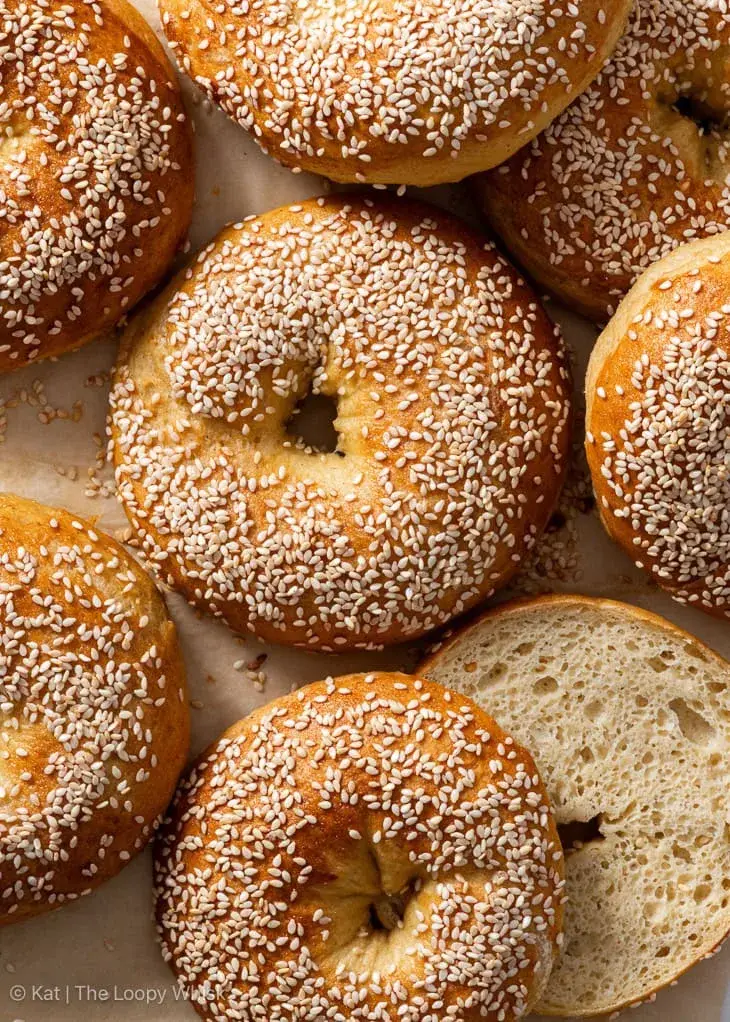
Gluten-Free Bagels: The Ultimate Homemade Recipe and Guide
If you love the chewy texture and satisfying flavor of traditional bagels but need to avoid gluten, you’re in luck. Homemade gluten-free bagels have become easier than ever to make thanks to high-quality gluten-free flour blends and a few simple baking techniques. Whether you have celiac disease, gluten sensitivity, or simply prefer gluten-free baking, this recipe delivers soft, chewy, golden-brown bagels that rival those from your favorite bakery.
Unlike many store-bought gluten-free bagels that can be dry, crumbly, or overly dense, these homemade bagels have a tender interior, a slightly crisp crust, and plenty of authentic bagel flavor. They are perfect for breakfast, sandwiches, snacks, or meal prep throughout the week.
Why You’ll Love These Gluten-Free Bagels
These homemade gluten-free bagels offer everything you want in a classic bagel:
- Soft, chewy texture
- Golden brown crust
- Easy to make at home
- Naturally customizable
- Great for freezing
- Perfect for breakfast or lunch
- No complicated techniques required
- Beginner-friendly recipe
Whether topped with cream cheese, avocado, smoked salmon, peanut butter, or homemade jam, these bagels provide the perfect base for countless meals.
What Makes Traditional Bagels Different?
Unlike regular bread, bagels are unique because they are:
- Mixed into a relatively stiff dough
- Allowed to rise
- Briefly boiled before baking
- Baked until golden brown
The boiling step creates the famous chewy crust that makes bagels so distinctive.
Fortunately, gluten-free bagels can achieve a similar texture with the right ingredients and method.
Ingredients
For the Dough
- 3 cups gluten-free all-purpose flour blend (with xanthan gum)
- 2¼ teaspoons active dry yeast (1 packet)
- 2 tablespoons granulated sugar
- 1 teaspoon salt
- 1 cup warm milk (or dairy-free milk)
- 2 tablespoons olive oil
- 2 large eggs
- 1 teaspoon apple cider vinegar
For Boiling
- 8 cups water
- 2 tablespoons honey or brown sugar
- 1 tablespoon baking soda
Egg Wash
- 1 egg
- 1 tablespoon water
Optional Toppings
- Everything bagel seasoning
- Sesame seeds
- Poppy seeds
- Onion flakes
- Garlic flakes
- Coarse salt
- Shredded cheese
Equipment Needed
- Large mixing bowl
- Electric mixer or stand mixer
- Baking sheet
- Parchment paper
- Large pot
- Slotted spoon
- Cooling rack
Step-by-Step Instructions
Step 1: Activate the Yeast
In a bowl, combine:
- Warm milk
- Sugar
- Yeast
Let sit for 5–10 minutes until frothy.
If your yeast doesn’t foam, start again with fresh yeast.
Step 2: Mix the Dough
Add:
- Eggs
- Olive oil
- Apple cider vinegar
Mix until combined.
Slowly add:
- Gluten-free flour
- Salt
Beat for 3–5 minutes until a thick dough forms.
Gluten-free dough is stickier than wheat dough, so don’t worry if it isn’t firm.
Step 3: First Rise
Cover the bowl with plastic wrap or a clean towel.
Allow the dough to rise in a warm place for 45–60 minutes.
The dough should become noticeably puffier.
Step 4: Shape the Bagels
Line a baking tray with parchment paper.
Lightly oil your hands.
Divide dough into 8 equal portions.
Roll each piece into a ball.
Poke a hole through the center using your finger.
Gently stretch the hole until it’s about 2 inches wide.
Remember that the hole will shrink during baking.
Step 5: Boil the Bagels
Bring water to a gentle boil.
Add:
- Honey
- Baking soda
Boil each bagel for:
- 30 seconds on one side
- 30 seconds on the other side
Use a slotted spoon to transfer them back onto the baking tray.
Boiling creates the classic chewy crust.
Step 6: Add Egg Wash
Whisk together:
- Egg
- Water
Brush each bagel generously.
Sprinkle with your chosen toppings.
Step 7: Bake
Bake at 400°F (200°C) for 22–28 minutes.
The bagels should become:
- Golden brown
- Firm
- Slightly crisp
Step 8: Cool
Transfer to a cooling rack.
Allow to cool at least 20 minutes before slicing.
Cooling finishes the internal texture.
Tips for Perfect Gluten-Free Bagels
Use a Good Flour Blend
Choose a blend containing:
- Rice flour
- Potato starch
- Tapioca starch
- Xanthan gum
Avoid single-flour recipes unless specifically developed for bagels.
Don’t Skip the Vinegar
Apple cider vinegar improves:
- Dough strength
- Rise
- Texture
Measure Flour Correctly
Too much flour creates dry bagels.
Use:
- Kitchen scale (best)
- Spoon-and-level method
Avoid scooping directly from the bag.
Oil Your Hands
Gluten-free dough can be sticky.
Lightly oiling your hands makes shaping much easier.
Make Large Center Holes
The dough expands significantly.
If the hole is too small, it may close completely during baking.
Flavor Variations
Everything Bagel
Top with:
- Sesame seeds
- Poppy seeds
- Onion flakes
- Garlic flakes
- Sea salt
Cinnamon Raisin
Add:
- 1 teaspoon cinnamon
- ¾ cup raisins
Perfect with butter or cream cheese.
Cheddar Jalapeño
Mix in:
- Shredded cheddar
- Diced jalapeños
Great for sandwiches.
Blueberry
Fold in:
- Fresh blueberries
- Frozen blueberries (unthawed)
Excellent for breakfast.
Asiago Cheese
Top with shredded Asiago before baking.
Creates a bakery-style finish.
Best Toppings
Popular choices include:
- Cream cheese
- Butter
- Peanut butter
- Almond butter
- Strawberry jam
- Honey
- Smoked salmon
- Avocado
- Fried egg
- Turkey slices
- Chicken salad
- Hummus
Storage
Store cooled bagels in an airtight container.
Room temperature:
- Up to 2 days
Refrigerator:
- Up to 5 days
Freezing Instructions
Gluten-free bagels freeze beautifully.
Allow to cool completely.
Slice before freezing.
Wrap individually.
Store in freezer bags.
Freeze for up to 3 months.
Toast directly from frozen.
Common Problems
Bagels Are Dense
Possible causes:
- Expired yeast
- Not enough rising time
- Too much flour
Dough Is Too Sticky
Gluten-free dough is naturally sticky.
Instead of adding lots of flour:
- Oil your hands
- Chill dough for 20 minutes if needed
Bagels Fall Flat
Possible reasons:
- Over-proofed dough
- Weak flour blend
- Skipping xanthan gum
Dry Bagels
Usually caused by:
- Overbaking
- Too much flour
- Incorrect flour blend
Nutrition (Approximate Per Bagel)
- Calories: 240
- Protein: 7g
- Fat: 6g
- Carbohydrates: 40g
- Fiber: 3g
- Sugar: 4g
Nutrition varies depending on ingredients and toppings.
Serving Ideas
Gluten-free bagels are incredibly versatile. Try them:
- Toasted with butter
- With cream cheese and smoked salmon
- As breakfast sandwiches with eggs and cheese
- With avocado and tomatoes
- Spread with peanut butter and banana slices
- As mini pizzas by topping with marinara and mozzarella
- With hummus, cucumbers, and sprouts
- Filled with chicken salad or tuna salad for lunch
They also make an excellent base for open-faced sandwiches or can be cut into cubes and toasted into bagel croutons for salads.
Final Thoughts
Making gluten-free bagels at home is a rewarding way to enjoy a classic favorite without compromising on flavor or texture. By using a quality gluten-free flour blend, allowing the dough to rise properly, and including the traditional boiling step before baking, you can achieve bagels with a chewy crust, soft interior, and delicious bakery-style taste. Whether you prefer them plain, topped with everything seasoning, or flavored with cinnamon raisins or cheese, these homemade bagels are versatile enough for breakfast, lunch, or snacks. Best of all, they freeze well, making them a convenient option for meal prep. Once you’ve mastered this recipe, you’ll always have fresh, satisfying gluten-free bagels ready to enjoy whenever the craving strikes.
